Tuesday, November 29, 2016

Lemon Citrus Milk

Lemon Citrus Milk


Perhaps this is my all-time personal favorite health detox drink! My morning daily ritual on an empty stomach, I make this every other day double portion enough for two days for one person.

My Citrus Milk taste as good as it looks, and you may modify it to your personal liking by adding more or less of the following ingredients…

                                                          Lemon Citrus Milk

Here’s what you’ll need…

Blender, glass container / glass bottles, funnel, sifter, spoon

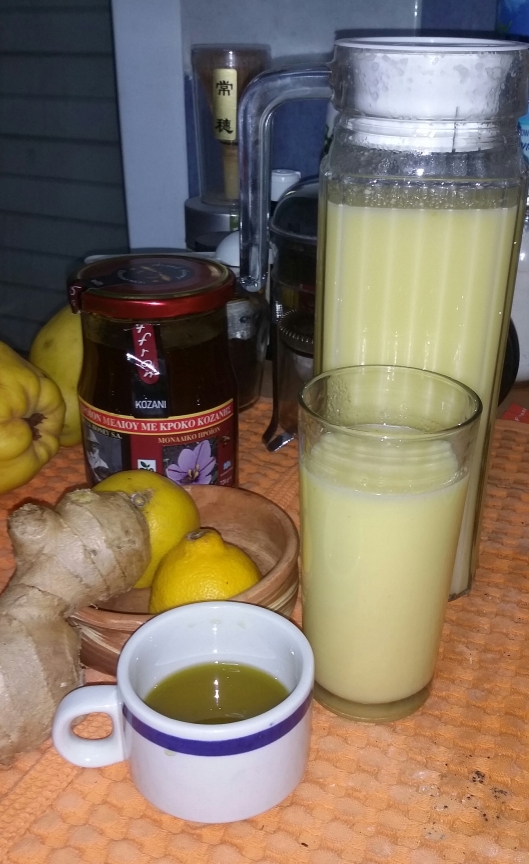
                                                Ingredients for Lemon Citrus Milk

Ingredients ~

One Lemon “Organic” medium to large
Fresh Ginger – 2 to 4 inches thinly sliced
Olive oil – 1 Tbsp first press, cold press, extra-virgin, organic. Use Greek olive oil or Braggs
Raw local honey – 1 Tbsp …more if you like it a bit sweeter
(Optional) a small fresh slice of turmeric
4 to 5 cups of purified water

Instructions ~ 

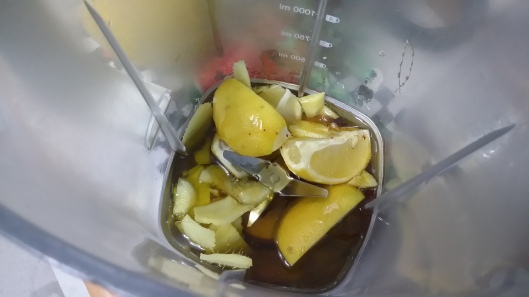
Wash lemon and cut in four quarters
Peel ginger & cut in thin slices (in photo I sometimes use my fermented ginger)
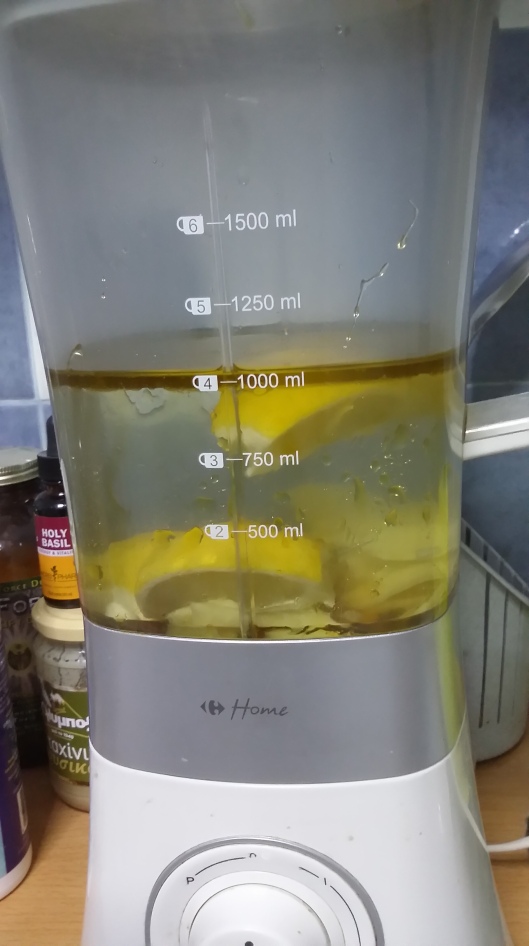
In blender add water and 1 Tablespoon of olive oil and 1 Tablespoon of raw honey  (add more or less to your liking)
Also add lemon and ginger into blender (optional turmeric – small slice)
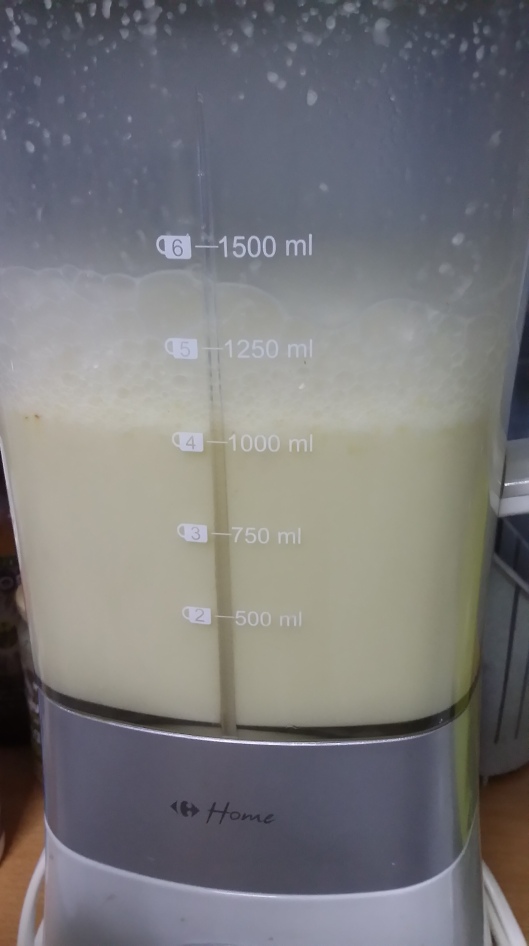
Blend all ingredients on low setting at first then “full high” setting for a few minutes until all contents are liquefied and pulp is extra fine.
Pour contents into a glass container or several glass jars using a funnel and fine sifter separating the pulp and only pouring liquid in container.
Use a spoon to move pulp around the sifter so liquid can get through. Once pulp fills the sifter place pulp aside into a small bowl and repeat until all liquid citrus milk is poured into glass container.
Drink your Citrus Milk on an empty stomach upon rising each morning. I love it so much and it taste so good I sometimes drink this throughout the day!
Refrigerate unused portion and drink within two days time.
(Optional) I sometimes use my pulp and mix it with organic cinnamon and raw honey and eat this as porridge! (see photos below).

Health Benefits ~ 

Lemon: Alkalizing – Lemons are acidic to begin with but they are alkaline-forming on body fluids helping to restore balance to the body’s pH. Rich in vitamin C & helps neutralize free radicals, cleaning for the liver and bowels, helps to dissolve gallstones, calcium deposits, and kidney stones, treats scravy, The lemon peel contains the potent phytonutrient tangeretin, which has been proven to be effective for brain disorders like Parkinson’s disease. Lemons have powerful antibacterial properties, strengthens blood vessels & eyes, Lemons contain 22 anti-cancer compounds, including naturally occurring limonene; oil which slows or halts the growth of cancer tumors in animals and flavonol glycosides which stop cell division in cancer cells. Lemon is the ONLY food in the world that is anionic (an ion with a negative charge). All other foods are cationic (the ion has a positive charge.) This makes it extremely useful to health as it is the interaction between anions and cations that ultimately provides all cell energy. (Read more on health benefits on lemons… http://www.care2.com/greenliving/16-health-benefits-of-lemons.html)

Actually all these ingredients are powerful superfoods and with this combination you’ll start to notice & feel great within days! You’ll have more energy, aids in weight loss, aches and pains will dissipate within a week! Remember there are no magic bullets cure all remedies, diet and exercise, rest and a low stress lifestyle must be incorporated.

                         Blend whole organic lemon, ginger, raw honey, extra-virgin olive oil

                                                   add 4 to 5 cups of purified water

                    Blend all ingredients until all contents are liquefied and pulp is extra fine.

                                 Use funnel and fine sifter to separate the pulp from liquid.

                                             Pour citrus milk into glass container(s)

           Ingredients for Lemon Citrus Milk – lemon, ginger, raw honey, extra-virgin olive oil  ♡

                    Porridge from citrus milk pulp, just add organic cinnamon & raw honey ♡

The porridge actually taste like a citrusy oatmeal… not bad at all, an acquired taste.

source by  https://ybertaud9.wordpress.com/

Monday, November 28, 2016

5 Herbal Tea Recipes to Boost Your Immunity This Winter

5 Herbal Tea Recipes to Boost Your Immunity This Winter


Let me say it upfront, I am rather a sickly type. I'm constantly felled by stomach upsets and colds. And if I escape those, there is always a headache lurking round the corner waiting to attack my hapless head or a sleepless night to look forward to. Luckily, there's always a soothing cup of herbal tea available as a panacea; even better, most of the herbs can be grown at home in your potted plants.

Herbal teas have long been considered warriors in the battle against bad health. Ginger, tulsi, mint, even pepper and cinnamon are all extremely healthy, landing a strong upper cut against illness of any kind. For instance, a gentle chamomile tea will ease anxiety and calm you enough to put you to sleep – it’s great for insomniacs; peppermint tea is well-known as an antidote to stomach ailments; and I've read that fennel tea has a light laxative effect on your digestive system.

Alright, so here's the thing about herbal teas – they aren't actually teas (hence they have no caffeine), but rather a decoction or infusion of herbs and spices. The term 'herbal tea' is a misnomer. You can put all sorts of things into your herbal tea – roots, flowers, leaves, seeds, fruit, really whatever you desire.

How to Make Your Own Herbal Tea

The first time I ever tried an herbal tisane was years ago and it was more or less love at first sip for me. It was made from a fancy packet of dried hibiscus (sorrel) flowers and was sent to me by a cousin in New York. The water was stained a deep crimson by the bag, the slightly tart sweetness of the herbal tea was infused with the gentle spice of ginger – all in all, it was subtle but delectable. But since then, I have relied more and more on making my own herbal concoctions, based on how I am feeling at the time.


I mostly use decoctions, in that I place roots and herbs in water and let it boil for some time, allowing the essences to ooze into the water. But you can also use the infusion method for milder leaf-based teas i. e. pouring boiling water over leaves and allowing them to steep.

Luckily, neither of these methods require any special equipment. The teas I have mentioned below are usually drunk hot and preferably in the mornings. And since these 'teas' do not have any caffeine in them though, they can easily be drunk at night as well.

These decoctions may not taste superb on their own though, which is why I always recommend sweetening them with a touch of honey or adding a bit of lime juice to cut the bitterness. My advice would be to mix and match various ingredients as per your taste, until you reach a tisane that pleases your taste buds.

Please note: I am not medically qualified and if you have even the slightest doubt about any of these teas, please consult with your doctor about them.

Herbal Tea Recipes

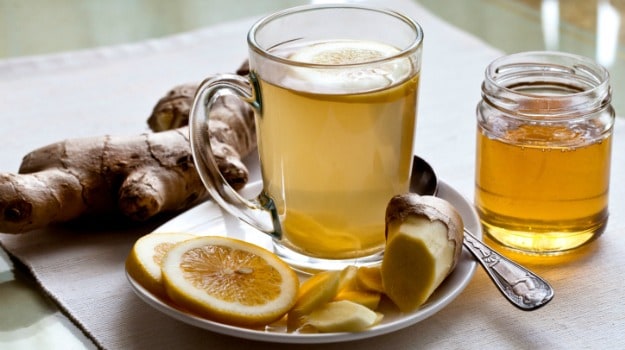
1. Ginger Tea

I drink this potion when I am doused with cold and cough, and fever. The heat from the ginger helps slay the germs and the honey soothes my sore throat. This one is a multi-tasker because it also heals stomach ailments; ginger and cinnamon are particularly helpful in alleviating the symptoms of a bad stomach.

1 tsp ginger root, grated
1 1/ 2 tsp honey
2 cloves
1-inch piece cinnamon bark
3-inch strip orange

Method: Bring your cupful of water to a bubbling boil. Next, add in all the ingredients, bring the heat down to low, and let everything steep for about fifteen minutes. Strain into a cup and drink.


2. Lemon and Pepper Tea

This particular drink I use to amp up my immunity when I'm feeling a bit low. It is said also to be excellent for detoxing the system (although scientists have a squabble with the term detox, stating that there is no such thing. Your kidneys are the only thing that can detox your body), and for reducing achy joint pains for arthritis sufferers.

Juice of 1 lemon
1/2 tsp turmeric powder
1/4 tsp pepper
1 1/2 tsp honey

Method: Place the pepper and turmeric in the cup, and pour over boiling water. Stir in the lemon juice and honey, and you're sorted.


 3. Ashwagandha Tea

Closer to home, ashwagandha is considered a sort of magic herb that helps kick up the immune system by several notches, stabilises blood sugar and reduces anxiety and stress.

5-inch piece dried ashwagandha root, approximately
1 tsp honey

Method: Wash and then boil the root in a cup of water, allowing to boil for about 15 to 20 minutes. Strain into a cup and then stir in the honey. Done!


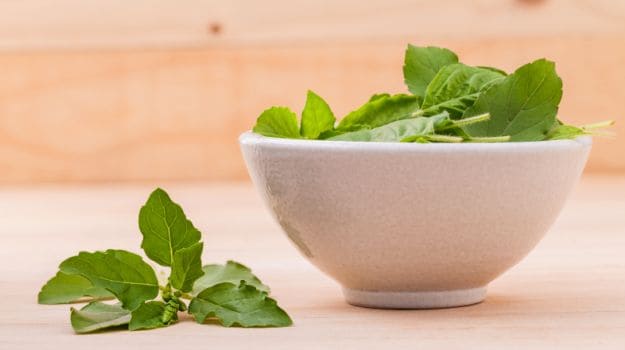
4. Tulsi Tea

Tulsi, or holy basil, is a pretty amazing herb. Not only does it rekindle your immunity and battle evil germs, it helps heal a clutch of skin disorders. Apparently, it also kicks some serious diabetic arse, helping to balance blood sugar.

1/4 cup basil
1 tsp honey
2 tsp lemon juice

Method: Put the basil leaves into a saucepan with one and a quarter cup of water. Bring to a boil. Then bring down the flame to low for 15 minutes. Strain into a cup, then add the honey and lemon juice and stir.


5. Mint Tea

This mint and rosemary combination makes a very refreshing jorum and helps to improve memory. It's also good for an upset tummy.

10 mint leaves
1 sprig rosemary
A squeeze lemon, optional

Method: Tear the mint leaves into a cup, while setting a pan of water to boil. Plop the rosemary in the pan. Once boiled, pour the water on the mint and let it sit for ten minutes. Add a splash of lemon, if required. Enjoy!


About the Author:Meher Mirza is an independent writer and editor, with a focus on food and travel. Formerly with BBC Good Food India, she loves anime, animals and artsy things but also comics, technology and death metal.

Disclaimer:

The opinions expressed within this article are the personal opinions of the author. NDTV is not responsible for the accuracy, completeness, suitability, or validity of any information on this article. All information is provided on an as-is basis. The information, facts or opinions appearing in the article do not reflect the views of NDTV and NDTV does not assume any responsibility or liability for the same.

source by  http://webcache.googleusercontent.com/

Thursday, November 24, 2016

Eat Your Way To Glowing Skin With These Delicious Recipes

Eat Your Way To Glowing Skin With These Delicious Recipes

They don't involve carrot sticks, promise.


                                                    Healthy skin from the inside out.

As much as we wish otherwise, if your diet is unhealthy, your skin will reflect that.

While this doesn't take into account frustrating factors like genetic predisposition and hormone imbalances (*sigh*), eating a well-balanced, varied diet can certainly help boost the health of your skin.

Eating for glowing skin doesn't mean you have to eat carrot sticks all day and that you can never eat delicious, flavoursome food. On the contrary, actually.

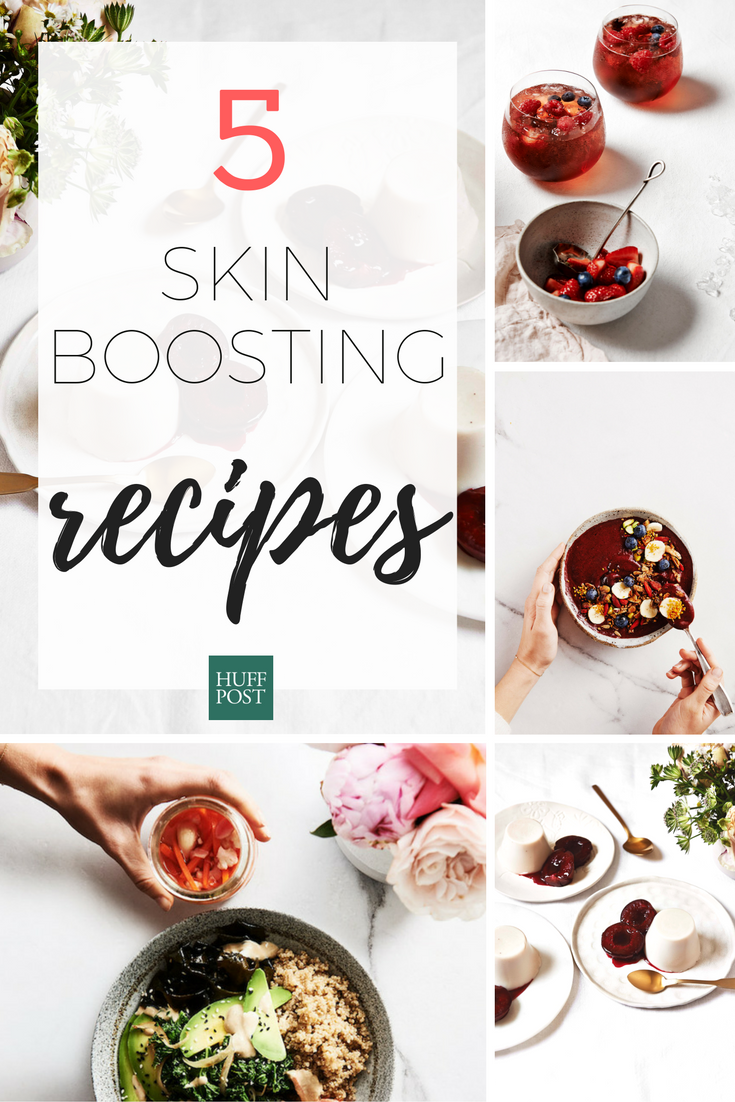
These recipes from The Beauty Chef cookbook are easy to make and are full of healthy skin-promoting properties such as fibre, vitamins, minerals and antioxidants.

They're also incredibly tasty and easy to prepare. Think cardamom pannacotta, berry smoothie bowl and mulled rosehip iced tea.


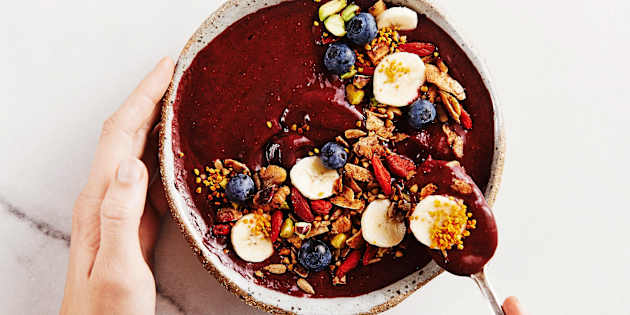
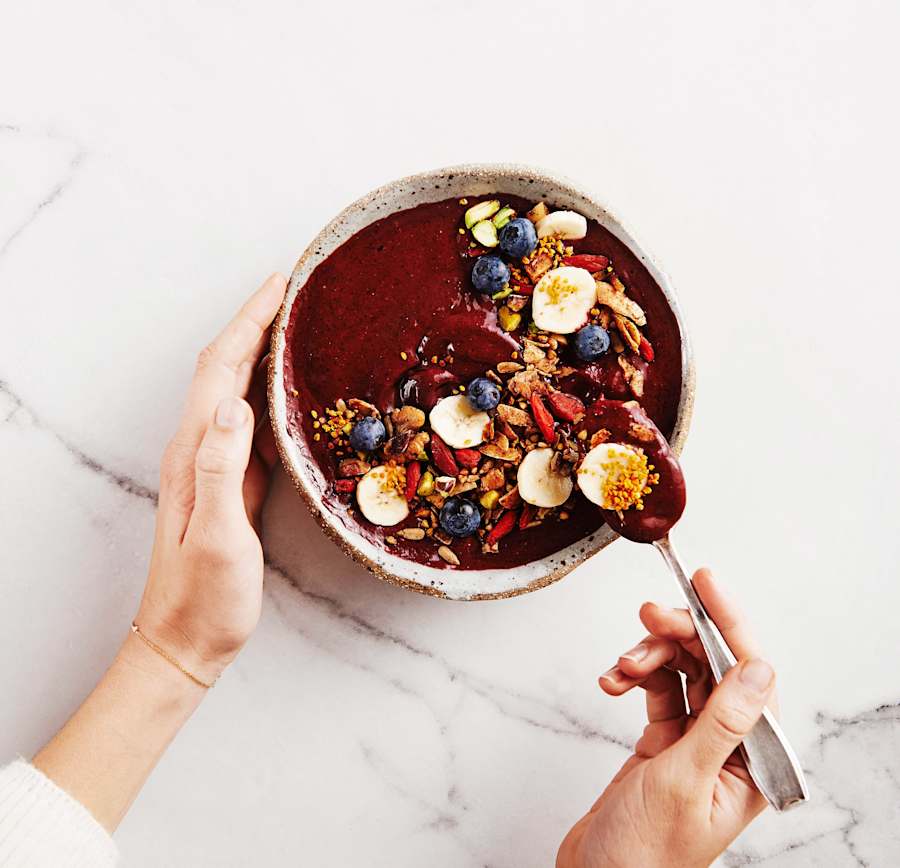
1. Get glowing smoothie bowl

This berry smoothie bowl is rich in fibre, vitamins, antioxidants, lipids and "skin protective and glow-giving minerals selenium, copper and zinc", Oates said.

Serves two.

INGREDIENTS

125g frozen blueberries
100g frozen unsweetened açai pulp, coarsely chopped
1 very ripe frozen banana, coarsely chopped
½ cup (125g) coconut kefir or natural yoghurt
2 teaspoons GLOW Inner Beauty Powder (optional)
¼ teaspoon ground cinnamon
2 teaspoons chia seeds
2 teaspoons cacao nibs
Topping:

1 small ripe banana, peeled and sliced
6-10 fresh blueberries
2 tablespoons granola
1 tablespoon finely chopped pistachios
1 tablespoon goji berries
1 teaspoon bee pollen (not suitable for those with bee allergies)
1 teaspoon hemp seeds (optional)

METHOD

1. To make the smoothie, blend the blueberries, açai, banana, kefir or yoghurt and GLOW powder, if using, cinnamon, chia seeds and cacao nibs in a high-speed blender, until smooth and creamy. Pour the smoothie into two wide, shallow serving bowls. Decorate with toppings. Eat immediately.

Note: The topping ingredients can be substituted according to personal taste or availability.

                                        This berry packed smoothie is perfect for summer.

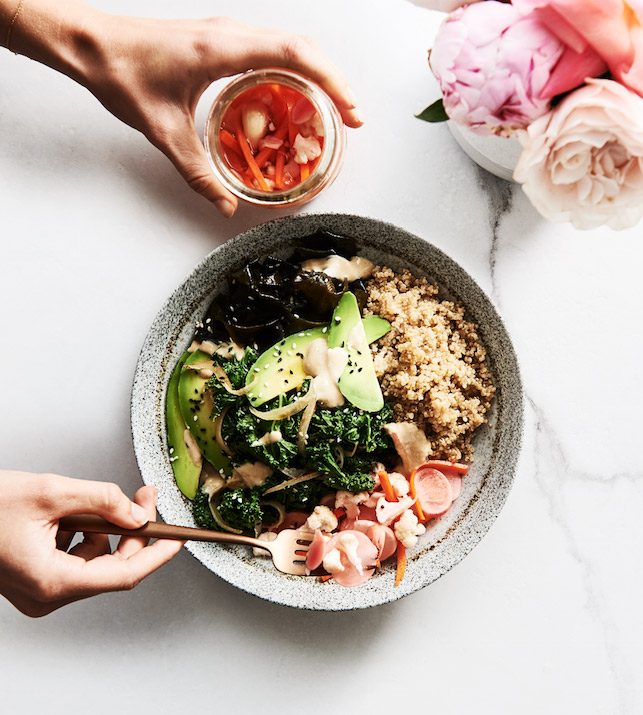
2. Kale bowl with quinoa, fermented vegetables, wakame and avocado

"Fresh and nutritious, this flavour packed dish features wakame, a great source of minerals that can be lacking in conventionally grown produce and that we need for healthy, glowing skin," Oates said.

Serves four.

INGREDIENTS

½ cup (100g) quinoa, rinsed
1 cup (250ml) water
7g wakame
1 tablespoon coconut oil
1 onion, thinly sliced
1 clove garlic, finely chopped
2 bunches (approx. 800g) kale, stemmed and coarsely chopped
2 teaspoons white sesame seeds, plus extra to serve
2 teaspoons black sesame seeds, plus extra to serve
½ teaspoon chilli flakes
1½ cups (230g) sweet and sour fermented vegetables
1 avocado, halved, stone removed and flesh sliced lengthways
½ cup (75g) raw cashews, roasted and coarsely chopped
Tahini sauce:

¼ cup (60ml) freshly squeezed lemon juice
¼ cup (60g) tahini
1 tablespoon extra virgin olive oil
2cm knob of ginger, peeled and finely grated
3 teaspoons tamari
2 teaspoons raw honey
1 teaspoon sesame oil

METHOD

1. Place the quinoa and water in a medium saucepan and bring to the boil. Cover and decrease the heat to low and gently simmer for 15 minutes, or until almost all of the water has been absorbed and holes appear on the surface. Keep covered and remove from the heat to finish cooking for a further five minutes, or until quinoa 'tails' have sprouted and all of the water has been absorbed. Keep warm.

2. Meanwhile, soak the wakame in cold water for five minutes, or until rehydrated. Drain and squeeze out excess water. Slice into strips. Set aside.

3. To prepare the sauce, place all of the ingredients in a jar and seal with a lid. Shake vigorously to combine.

4. Heat the coconut oil in a large frying pan or wok over low-medium heat. Cook the onion and garlic, until softened. Add the kale and cook, stirring occasionally, for 4-5 minutes, until wilted. Add the sesame seeds and chilli flakes and toss to combine.

5. To serve, arrange the kale, quinoa, wakame, fermented vegetables and avocado into serving bowls. Drizzle with the tahini sauce and scatter with roasted cashews and extra sesame seeds.

                                     Make doubles of this recipe to take to work for lunch.

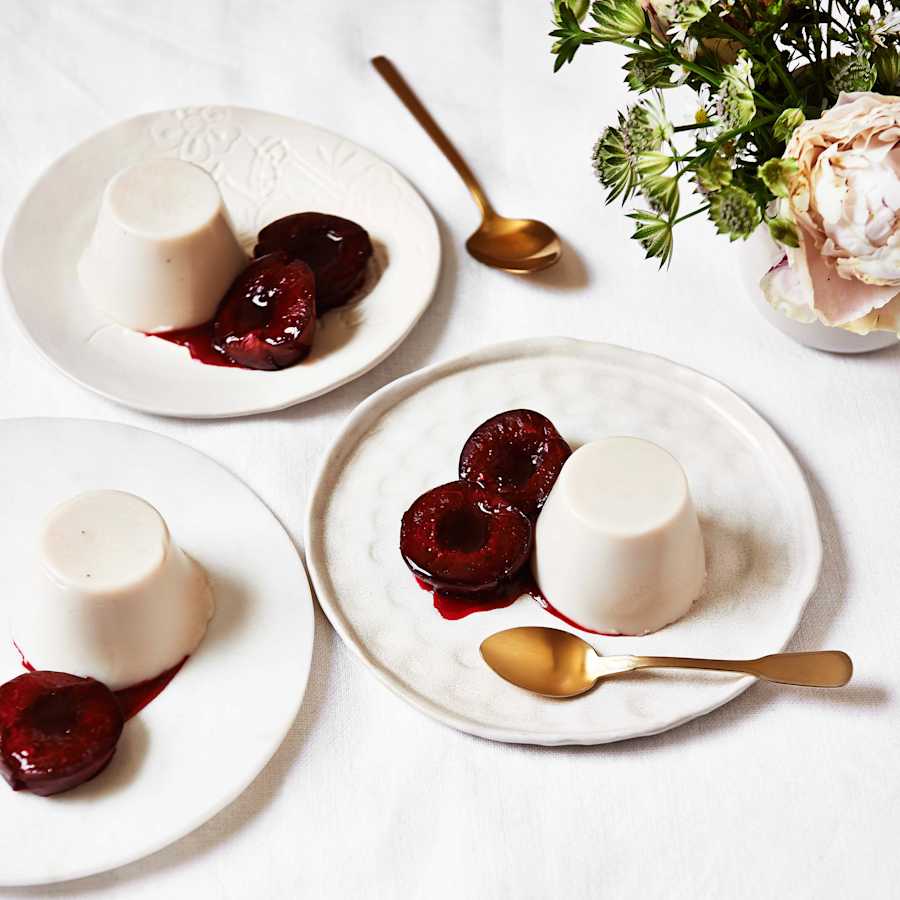
3. Cardamom and almond milk pannacotta with roasted blood plums

"Made with gelatin, which is rich in gut-healing amino acids, and warming and digestive-balancing cardamom and plums, this dessert is much loved in our house," Oates said.

Makes four.

INGREDIENTS

Coconut oil, for greasing
1 tablespoon green cardamom pods
2 cups (500ml) almond milk
1½ tablespoons raw honey
2 level teaspoons gelatin powder
Roasted blood plums:

4 small blood plums
⅓ cup (80ml) water
1 tablespoon raw honey

METHOD

1. Lightly grease four ½-cup capacity moulds with coconut oil. Place in the refrigerator until required.

2. Squash the cardamom pods with the back of a wooden spoon, then place in a small saucepan and toast over low heat for 30 seconds, or until fragrant.

3. Pour 1½ cups (375ml) of the almond milk into the saucepan. Gently heat for five minutes. Remove from the heat and stir in the honey. Set aside to infuse for 10 minutes.

4. Pour the remaining almond milk into a small bowl. Sprinkle the gelatin in a thin layer over the top and set aside for 10 minutes, to dissolve.

5. Strain the infused milk through a fine mesh sieve. Return to the saucepan and gently reheat, until warm. Remove from the heat, add the dissolved gelatin mixture and stir to combine. Set aside to cool.

6. Pour the cooled mixture into the prepared moulds. Refrigerate for four hours, or until set.

7. Preheat the oven to 180°C.

8. Meanwhile to prepare the roasted blood plums, cut the plums in half and remove the stones. Arrange the plums, cut-side up, in a small baking dish. Pour the water into the base of the dish and drizzle the plums with honey. Roast for 20 minutes, or until tender and juices have begun to release to form a syrup. Let cool.

9. To release the pannacottas from their moulds, use your fingertips to gently pull the pannacotta away from the sides of the mould, breaking the seal. Immediately invert onto serving plates. They will hold their shape but have a lovely wobble.

10. Serve the pannacottas with roasted plum halves and syrup.

Note: The pannacottas can be made in advance and stored in the refrigerator for up to three days.

                                                       Healthy dessert? We'll take it
.
4. Mulled rosehip iced berry cooler

"Packed with immune boosting vitamin C, hibiscus imparts a gorgeous red hue and subtle natural sourness to this summer quencher," Oates said.

"Paired with a warming blend of mulled spices and sweetened with a little honey, it's the perfect balance of flavours and an ideal alcohol-free drink."

Makes 1.5 litres.

INGREDIENTS

2 cinnamon sticks
3 star anise
6 whole cloves
7 whole black peppercorns
3 cups (750ml) water
3 rosehip and hibiscus tea bags
¼ cup (60ml) raw honey
Crushed ice, to serve
250g strawberries, hulled and quartered
125g blueberries
125g raspberries
3 cups (750ml) sparkling mineral water

METHOD

1. Dry roast the spices in a medium saucepan over low-medium heat for one minute, or until fragrant.

2. Pour in the water and bring to the boil. Decrease the heat and simmer for five minutes.

3. Remove from the heat. Add the tea bags and steep for five minutes.

4. Remove and discard the tea bags. Add the honey and stir to combine. Set aside to cool. Refrigerate to chill.

5. When ready to serve, quarter fill a large serving jug or individual serving glasses with crushed ice and top with the berries. Pour over the chilled spiced tea mixture and top up with mineral water.


Add sprigs of mint for extra freshness.

5. Roasted dandelion and chicory frappé

"The roasted dandelion and chicory root in this recipe produce a bitter coffee-like flavour, making it a perfect base for this iced coffee style frappé," Oates said.

Serves one.

INGREDIENTS

½ cup (125ml) water
1 tablespoon roasted dandelion and chicory root
12 ice cubes
½ cup (125ml) coconut milk, plus extra to serve
2 teaspoons raw honey, or to taste
½ teaspoon vanilla bean powder
½ teaspoon ground cinnamon, plus extra to serve (optional)
¼ teaspoon ground allspice, plus extra to serve (optional)

METHOD

1. Combine the water and roasted dandelion and chicory root in a small saucepan and bring to a simmer over low heat. Simmer for five minutes, or until reduced by half. Set aside to cool and infuse.

2. Strain infused liquid through a fine-mesh sieve.

3. Place the cooled liquid and remaining ingredients in a high speed blender. Blend for 20 seconds, or until ice is crushed. Taste and sweeten further, as desired.

4. Pour into a tall glass to serve. Top with additional coconut milk and sprinkle with spices, if desired.

Note: The dandelion and chicory base can be made in advance and stored in an airtight container in the refrigerator for up to five days.

                                         A delicious caffeine free iced coffee alternative

source by  http://www.huffingtonpost.com.au/

This Healthy Coconut Macaroons Recipe Is So Low-Cal You Can Eat Them All

This Healthy Coconut Macaroons Recipe Is So Low-Cal You Can Eat Them All

One for me, two for me, three for me...

From your morning snack to the afternoon munchies to dessert time, sometimes you just need a little something sweet—that's where these tasty little coconut macaroons come in. The recipe is courtesy of Devin Alexander, celebrity chef and weight-loss coach and nutrition guide behind NBC's The Biggest Loser.

"They're a bit less gooey and buttery than the traditional ones, but that's actually good because it allows true coconut lovers to enjoy the coconut," says Alexander. (Plus, you get all these coconut health benefits.) A typical macaroon this size would log about 120 calories and 4 to 6 grams of fat each. These babies are a steal at only 86 calories and 3 grams of fat—for two of them! Meaning, yes, you can totally go ahead and eat them all. We won't tell.

Mitch Mandel

Coconut Macaroons Recipe

Makes 5 servings.

Ingredients

Butter-flavored cooking spray
2 large egg whites
2 tablespoons coconut sugar
2 tablespoons light agave nectar
2/3 cup finely shredded, reduced-fat, unsweetened coconut

Directions

1. Preheat oven to 300°F. Line a medium baking sheet with parchment paper and lightly mist it with spray.
2. Whisk together the egg whites, coconut sugar, and agave until the sugar is completely dissolved. Stir in the coconut until well combined.
3. Spoon the batter in mounds (about 1 level tablespoon per macaroon) onto the prepared pan, so they don't touch, to make 10 macaroons.
4. Bake for 23 to 25 minutes, or until macaroons are lightly golden brown.
5. Remove the pan and place on a wire cooling rack. Let cool about 5 minutes, then transfer macaroons to the cooling rack and allow to cool completely. Serve immediately or store them in a resealable plastic container for up to 5 days.

Nutrition per 2 cookies: 86 calories, 2g protein, 13g carbohydrates (10g sugar), 3g fat, 3g saturated fat, 0mg cholesterol, 1g fiber, 33mg sodium

source by  http://www.shape.com/healthy-eating/

Crush Friendsgiving with These Candied Ginger Carrot Cakelets

Crush Friendsgiving with These Candied Ginger Carrot Cakelets

Your friends, family, and coworkers are not going to be able to get enough of these healthy mini sweet treats


You've been tasked with bringing dessert to your annual Friendsgiving or office potluck. You don't want to bring just any old pumpkin pie or apple crisp (although these healthy pies can make the cut), and you know there is going to be a surplus of decadent desserts and savory sides overflowing the conference room table or kitchen island. The answer to this holiday dilemma, and frankly, all dessert dilemmas everywhere: these candied ginger cakelets. (How adorable is the word cakelet, anyway?)

The recipe, created by food writer Genevieve Ko, has all the flavor you expect from a delicious dessert, but none of the bad-for-you stuff that puts you into a food coma after a marathon day of eating. (Ko knows a thing or two about healthy baking. She even wrote a book on it called Better Baking: Wholesome Ingredients, Delicious Desserts. More of her tasty recipes were featured in a recent issue of Shape—check out those decadent healthy desserts with good-for-you benefits.)

The best part about these mini cakes? Any leftovers that make it through the holiday party (which will be slim) can easily be packed in a Ziploc bag for a pre-portioned sweet snack after the holidays. You can thank mini muffin trays for that.

Well, what are you waiting for? Dig in and enjoy.

Candied Ginger Carrot Cakelets

Ingredients
1/2 cup (71g) unbleached all-purpose flour
1/2 cup (69g) barley flour
1 1/4 teaspoons baking powder
1/4 teaspoon salt
12 ounces (340g) carrots, trimmed, peeled, and cut into chunks
2 large eggs, at room temperature
1/3 cup (75g) grapeseed or other neutral oil
3/4 cup (156g) sugar
1 teaspoon ground ginger
1/2 cup (81g) candied ginger, cut into slivers

Directions

1.Position rack in the center of the oven and preheat to 350°F. Coat 36 mini muffin cups with nonstick cooking spray.
2.Whisk both flours, baking powder, and salt in large bowl. Combine carrots, eggs, oil, sugar, and ground ginger in a blender and purée on high speed until very smooth, scraping jar occasionally. (You don't want any bits of carrot left.)
3.Make a well in dry ingredients and pour in carrot mixture. Slowly and gently stir with a whisk, dragging in flour from the edges, until dry ingredients are fully incorporated and mixture is smooth. Divide batter among muffin cups. Top with candied ginger slivers.
4.Bake for 5 minutes. Reduce oven temperature to 325°F and bake until a toothpick inserted in center of a mini cake (in middle of pan) comes out clean, 20 to 25 minutes more. Cakes will rise but not dome.
5.Cool in pan on wire rack for 10 minutes, then slide small offset spatula or knife between each cake and the pan to pop out. Cool on racks until warm or at room temperature.

source by http://www.shape.com/healthy-eating/

Tuesday, November 22, 2016

unty food pantries start healthy eating initiative

unty food pantries start healthy eating initiative

County officials approve resolution to help get healthier donations into the hands of needy families


Volunteer Dorothy Latta assists families in need and in crisis situations pick out food from all the essential food groups at the Plattsburgh Interfaith Food Shelf. Latta is now trying to promote the pantry’s healthier items.

PLATTSBURGH — For those with a limited budget, healthy food options can hard to come by.
But the Clinton County Legislature and Health Department plan on changing that by increasing the availability of healthy items at food banks.
Earlier this month, county officials voted unanimously to accept over $300,000 in funding through the National Women, Infants and Children Association and NYS Health Foundation.
“The donations food banks are currently getting aren’t as healthy as we would like them to be,” County Legislator Jonathan Beach said. “We want to change that.”

Mandy Snay, director of health planning and promotion, said in February the department utilized a portion of this funding into an evaluation of some local food banks.
Through this, the health department gained knowledge of each bank and what the nutritional needs are for the pantries and their customers.

JCEO’s 12 sites and the Plattsburgh Interfaith Food Shelf serve thousands of people each month. Both entities receive foods through the regional food bank, business donations and community donations.

Botorganizations serve thousands of people each month, Snay said.
“Instead of having to purchase those (healthy) items,” she said, “we want to try to get them through donations.”
The funding will partially go toward improving refrigeration in order to accommodate more healthier options, such as dairy, meat, eggs and possibly milk.
The rest of the funds will go toward spearheading a community campaign to get healthier donations into the hands of needy families.
Snay said the department plans on doing this through advertising, educational presentations at local food drives and markets and working with the pantries themselves.

Participating food pantries include the Plattsburgh Interfaith Food Shelf and the JCEO food pantries in Altona, Ausable, Black Brook, Champlain, Chazy, Clinton, Dannemora, Ellenburg, Peru, Saranac, town of Plattsburgh and city of Plattsburgh.
JCEO’s sites give families in need three-days worth of food and follow nutritional guidelines by the regional food bank.
Clients get to choose a number of items from each category, such as fruits, vegetables, grains and proteins.
Community Outreach Director Sally Sousie said through this initiative plans on educating their clients about healthier eating with the products in the pantries, including putting up posters with nutritional facts and writing healthy recipes.
“We have no issue getting healthy foods,” Sousie said. “But we do want our clients to choose the healthier option.”
The Plattsburgh Interfaith Food Shelf, on the other hand, does not receive as much healthy choices as they would like.

“I’m not going to lie, not all of our food is healthy,” said volunteer Dorothy Latta. “But we’re hoping to get healthier donations through this initiative.”
The emergency food pantry offers families in need four days worth of food and drinks seven times a year.
Healthy choices are limited, said Latta.
The volunteers purchase 22,000 of food per month from the regional food bank, which is 90 percent of their $150,000 budget.
A majority of that order, Latta said, is for foods with less sodium and fat.
Latta said she’s noticed a trend in more clients going toward the canned beef stew and boxed macaroni and cheese instead of the canned tuna and whole wheat pasta. As part of the initiative, the food shelf hopes to get out into the community during food drives and markets in hopes to get people to donate healthier items.
Snay said the campaign and upgrades to the food pantries should start sometime next month.

source by  http://www.suncommunitynews.com/

Recipes: Healthy side dishes for Thanksgiving

Recipes: Healthy side dishes for Thanksgiving


Make the most of Turkey Day with these cooking tips

It’s that time of year again.

Perhaps, you are visiting family – you will need to figure out what to bring.

Because I do have some food restrictions being a pescatarian and healthy eater, I have compiled some easy and healthy recipes you can whip up if you are host/hostess, or if you are bringing to a potluck dinner.


The key here is that these are out-of-the-ordinary recipes for Thanksgiving.

KALE AND RAISIN WALNUT SALAD

I love this salad! What a great way to begin a meal! The raisins add a bit of sweetness to the salad, but if you are off sugar, you can substitute the raisins for chopped apples or pears.

Ingredients:

1 package organic kale

½ cup raisins

¼ cup walnuts

¼ cup olive oil

Juice of a lemon

2 teaspoons apple cider vinegar

Salt

Feta Cheese to takes

Directions:

Place kale, raisins and walnuts in a large salad bowl.

In a smaller bowl, whisk olive oil, juice of a lemon and apple cider vinegar. If you would like more olive oil, modify for your taste.

Toss dressing with kale mixture. Top with crumbled feta cheese and season with salt and pepper.

                                                Quick Thai curry.

QUICK THAI CURRY

This vegetarian recipe is so fast and easy. It can easily translate to a quick weeknight meal with leftovers for the next day.

Ingredients:

1 can coconut milk

About 3 tablespoons Thai curry paste - any type

4 cups frozen or fresh vegetables, in a large chop

1 small/medium onion

Sriracha

Directions:

Heat coconut milk in large deep pan.

Stir in curry paste when coconut milk is almost at a boil, reduce heat and simmer 5 minutes.

Add in vegetables, cook to desired doneness

At the same time slice onion and brown in pan with a small amount of olive oil. add to curry when done.

Add sriracha or other hot sauce to taste

“HEALTHIER” STUFFING

Replacing the butter with vegetable oil will be a healthy swap. Adding apples and figs to replace the usual suspects – sausage and meat – will reduce calories without sacrificing flavor.

Ingredients:

2/3 cup vegetable oil

1 medium onion, chopped

3 tablespoons Italian seasoning mix

1 loaf whole wheat bread, cubed small pieces

1 cup vegetable broth

1 chopped apple – Fuji works best

9 chopped dried figs

1 tablespoon rosemary

Salt and pepper to taste

Directions:

Preheat oven at 375 degrees

In a large pot, heat vegetable oil

Then add and sauté onion, seasoning, apple, rosemary and figs for approximately 5 minutes.

Stir in salt and pepper as needed

Add bread and vegetable broth.

Grease a baking dish (9x9 works), spread mixture and bake for about 35 to 45 minutes. Make sure the baking dish is deep enough for the mixture (about 2-inches deep).

GLAZED CARROTS

So easy to make, yet tastes so good. This dish may be a side dish, but stands out.

Ingredients:

4 cups sparkling lemonade

1 pound baby carrots, trimmed

1/3 cup honey

2 tablespoons chopped fresh sage

Salt and pepper

Directions:

Bring lemonade and carrots to a boil in a saucepan over medium heat. Cook 15 minutes, or until carrots are tender.

Drain and reserve 3 tablespoons of the liquid. Place carrots on a plate.

Whisk honey and the 3 tablespoons leftover liquid. Drizzle over carrots and garnish with fresh chopped sage.

Season with salt and pepper, if desired.

source by  http://www.app.com/

Healthy recipes and effective social marketing campaign improve eating habits

Healthy recipes and effective social marketing campaign improve eating habits


COWBOY SALAD IS A RECIPE DEVELOPED BY THE FOOD HERO HEALTHY EATING PROGRAM

CORVALLIS, Ore. - The Food Hero social marketing campaign is an effective way to help low-income families eat more nutritious meals through fast, tasty, affordable and healthy recipes, two new research studies from Oregon State University have found.

Food Hero was launched by the OSU Extension Service in 2009 in an effort to encourage healthy eating among low-income Oregonians. The initiative includes several components, such as a website, http://www.foodhero.org, with information in both English and Spanish; Food Hero recipe taste-tasting events in schools and communities across Oregon; and a library of healthy recipes that have all been taste-tested and many approved by children.

"The success of the program is by far exceeding the scope of what we envisioned when we started," said Melinda Manore, a professor of nutrition in the College of Public Health and Human Sciences at OSU and co-author of the studies. "Getting people to change their diet and eating behavior, especially when they do not have much money, is very difficult, and this program is helping to do that."

The social marketing program is led by Lauren Tobey of Extension Family and Community Health at OSU, and Tobey is lead author of the studies. Food Hero is funded by the U.S. Department of Agriculture Food and Nutrition Service's Supplemental Nutrition Assistance Program - Education, or SNAP-Ed. SNAP-Ed focuses on obesity prevention within low-income households.

One of the new studies, published in the journal Nutrients, explores how Food Hero was developed and tested. The goal of the program is to increase fruit and vegetable consumption among those eligible for SNAP benefits in Oregon, with a particular focus on low-income mothers.

The campaign's strategy includes providing clearly focused messages, writing in plain language, being positive and realistic with the messaging, and offering simple tools for action that include an explanation of what to do and how to do it. The campaign has been effective in part because educators stayed focused on their target audience, the researchers said.

The other study, published in the Journal of Nutrition Education and Behavior, examines Food Hero's recipe project in more depth. The recipes used in the Food Hero campaign are formulated to be healthy, tasty and kid-friendly. To date, the Food Hero recipes have been accessed millions of times via the website and social media sites such as Pinterest.

"All of the recipes are simple to make and cost-effective for families on tight budgets," Tobey said. "Many families can't afford to have a recipe fail or try an untested recipe the family may not end up liking."

The recipes also are being tested with children who complete surveys or participate in a vote. If at least 70 percent of participating children say they "like the taste" of a recipe, it is considered "kid-approved." The program has collected more than 20,000 assessments from kids who have tried Food Hero recipes at school or at community events. About 36 percent of the tested recipes have received the "kid-approved" rating to date.

"When our nutrition educators say to the children, 'Would you like to try this for us and tell us what you think?' it empowers them," Manore said. "It also is a way to expose kids to foods they may not have tried before."

Parents and caregivers are also surveyed after their children participate in tasting exercises. Of those who completed surveys, 79 percent said their child talked about what they had learned in school about healthy eating; 69 percent reported that their child asked for specific recipes; and 72 percent reported making at least one Food Hero recipe, the research showed.

As Food Hero's tips, tools and recipes get shared in person, online, through the media and via social media, the program's reach also expands beyond the initial audience, the researchers said. Recipes from the program are now being used around the world, and in 2015, the recipes on the Food Hero website received more than 290,000 page views.

Anyone interested can also subscribe to Food Hero Monthly, an electronic magazine that includes recipes and tips. To sign up, visit https://foodhero.org/monthly-magazine.

In addition to their collaborations with Oregon partners such as the Department of Human Services, Department of Education and Oregon Health Authority, Food Hero program leaders are sharing materials and ideas with public health and SNAP-Ed programs in other states.

"Since 95 percent of the Food Hero recipes contain fruits and/or vegetables, people who try the recipes are helping us meet the primary goal of the campaign, which is to encourage more fruit and vegetable consumption, especially among low-income families," Tobey said.

source by  https://www.eurekalert.org/

Healthy Sheet Pan Thanksgiving Dinner

Healthy Sheet Pan Thanksgiving Dinner


The words “quick,” “easy” and “Thanksgiving” typically don’t go together, but rules are being broken with this streamlined sheet-pan turkey dinner. It’s got all the elements of a typical Thanksgiving dinner, without the hours of prep and stovetop cooking. This dinner is just about the best thing to happen to hungry, time-starved cooks. Take a large baking sheet, add turkey, seasonings and vegetables, then roast until the meat is juicy and the vegetables are crispy and browned. Did I mention that cleanup takes less than two minutes? Throw away the sheet of parchment paper and place any leftovers in the fridge. Done and done.

If your meat section doesn’t have skin-on turkey breasts available, ask at the butcher. Most places that grind their turkey meat in-house use this type of cut to do so and should be able to supply you with a small breast portion. If you decide to use a breast that still contains the bone, you will likely need to increase the cooking time till done.

Sheet Pan Turkey Dinner
Serves 4

1 1/2 pounds skin-on turkey breast
2 tablespoons unsalted butter
1/2 teaspoon salt
1/2 teaspoon ground pepper
6 sprigs thyme
4 sprigs rosemary
1 head of garlic, cloves peeled, crushed
1 butternut squash, peeled, diced and seeds removed, roughly 4 cups
24 Brussels sprouts, trimmed and sliced in half
1 tablespoon olive oil

Preheat oven to 425 degrees F. Gently loosen skin from turkey breasts and rub butter under skin and all over outside of breasts; season generously with salt and freshly ground pepper.

Scatter thyme sprigs, rosemary sprigs and garlic over a large, parchment-lined baking sheet and arrange turkey breasts, skin-side up, on top. Place in the oven and roast for 20 minutes.

While the turkey is cooking, toss the butternut squash and Brussels sprouts with olive oil and a pinch of salt and ground pepper. Remove the turkey from oven after 20 minutes and arrange the vegetables on the same baking sheet, trying to create as even a layer as possible. Roast for another 20 to 25 minutes, or until vegetables are tender and an instant-read thermometer inserted into the thickest part of the breast reads 165 degrees F.

Remove from pan and let sit for 10 minutes. Slice breast and serve with roasted vegetables.

source by  http://blog.foodnetwork.com/

Thursday, November 17, 2016

Recipes: Healthy and flavorful Thanksgiving dishes

Recipes: Healthy and flavorful Thanksgiving dishes


GRAND RAPIDS, Mich (WOOD) – For many, Thanksgiving is the perfect holiday. It kicks off a long weekend that’s filled with fantastic food, family and friends, and lots of football! There are endless options for what we put on the table, so Chef Mark Kingshott joined eightWest with some of his favorite recipes!

Brussel Sprout and Sweet Potato Sautee

2 TB olive oil
1 lb Brussel Sprouts, trimmed and halved
1 lb Sweet Potatoes peeled and diced ½ to ¾ of an inch thick
1/3 cup of dried cranberries
¼ tsp salt
¼ tsp black pepper
1TB soy sauce
1 TB Maple Syrup
Directions: Heat oil in large saute pan between medium and medium high heat. Once oil is shimmering, add Brussel sprouts, cook for 2 minutes, then add sweet potatoes. As Brussel sprouts and sweet potatoes caramelize, stir to prevent scorching. Once sweet potatoes are softened, add salt, pepper, soy sauce and maple syrup. Remove from heat and stir. Yields 6-8 servings

Potato and Cauliflower Mash

3 LBS Yukon Gold Potatoes (peeled or not), cut in half
1 Large head of cauliflower, trimmed and cut into florets
¼ cup thin sliced scallions (green onion)
1 ½ tsp salt
¾ tsp black pepper
2 TB butter
1 cup skim milk (add more if too chunky)
Directions: Place potatoes and cauliflower in a pot. Fill with water until potatoes are just covered and cauliflower is just floating over potatoes. Cook until potatoes are tender. Drain, place back in pan. Add salt, pepper, butter and skim milk. Whip until desired smoothness. Add scallions, stir, serve. Yields 6-8 people

Pan Roasted Turkey Breast with Onion Sauce

*1-2 Turkey Breasts
3 TB Vegetable Oil
2 tsp chopped rosemary
2 tsp chopped thyme
1 TB chopped parsley
2 sage leaves chopped
Generous pinch of salt and pepper
1 TB butter
1 cup chicken or turkey stock
Pre-heat oven to 375. In large sauté pan, heat vegetable oil on medium high. Season both sides of turkey breast with herbs, salt and pepper. Place turkey into pan skin side down. Cook for 6-8 minutes or until skin side is golden brown. Flip turkey, add butter and turkey stock. Bring to a simmer, spoon liquid over turkey breast, cook for 4 minutes. Remove from heat and place into oven. Cook until turkey reaches 165 degrees in the thickest part. Remove and let rest for 5 minutes. Slice and serve

*note: Jennie O sells fresh turkey breast in some markets. Most markets sell turkey breast still attached to the bird. Check youTube on how to successfully remove the breasts from the carcass. LEAVE the skin on to keep the turkey juicy.

Caramelized Onion Sauce

2 large Spanish or Yellow onions sliced thin
3 garlic cloves
2 TB olive oil
1 tsp chopped rosemary
1 small sage leaf
2 Cups Turkey Stock (Or chicken if you can’t find turkey stock)
2 TB cornstarch mixed with 2 TB water.
Salt and Pepper to taste
Directions: Heat olive oil in larger sauce pan on medium, add onions and garlic. Stir often and cook until onions are caramelized (deep amber color but not burnt), approx. 20 to 30 minutes. Add rosemary, sage and turkey stock. Bring to a simmer and cook for 15-20 minutes. Transfer all the ingredients to a blender or food processor (ensure you leave plenty of space at the top to prevent a spill over while running the device). Puree until fully smooth. Return contents to pan and bring to a simmer. Add half of the cornstarch slurry to pan and thicken until it coats the back of a spoon. Add a little bit of cornstarch slurry at a time to ensure it doesn’t get too thick. Add a pinch of salt and pepper, taste, add more if necessary, serve.

source by  http://woodtv.com/

Tuesday, November 15, 2016

Seven healthy recipes to enjoy this week

Seven healthy recipes to enjoy this week


                                    leftovers to make bright pink arancini balls the next day.

STRUGGLING to find easy, healthy meals to whip up midweek? Well look no further, because we have this week covered.


MONDAY

Boy, do we have a treat for ‘meat-free Monday’ this week. Beetroot risotto with goats’ cheese and walnuts is not only a fancy grown-up meal that looks a treat on the plate, it is ridiculously satisfying and will excite your vego and non-vego friends alike. And the best part of risotto, besides dousing in parmesan cheese and devouring it, is that you can make bright pink arancini balls the following day.

                                    You CAN make friends with salad.Source:Taste.com.au

TUESDAY


Let this protein-packed, high fibre dish refuel your body.Source:Taste.com.au

Summer is often synonymous with fresh, seasonal meals such as salad. And in contrast to popular belief (looking at you Marge Simpson), salads are totally ‘friendly’, as well as healthy, tasty and usually a cinch to whip up. Chicken and black rice salad with coconut dressing is the perfect dish to devour on its own, or paired with Asian crispy pork belly for a family-style meal.

WEDNESDAY


                         A better steak sandwich than you ever had at the pub.Source:Supplied

What’s better than a steak sandwich? That’s right, nothing. This roast beef, sauerkraut, beetroot and goat’s cheese sandwich is simple to make and bursting with flavour. Wrap it up for lunch or enjoy as a light dinner option.

THURSDAY


                     Let this protein-packed, high fibre dish refuel your body.Source:Taste.com.au

This salad is packed full of protein from both the lamb and the freekeh (roasted wheat). Enjoy as a recovery meal after a hard slog at the gym, or just whip it up at the end of a long day as a high fibre comfort dish. Lamb and freekeh salad is also just as good the next day, so my advice is double everything and lord it over your colleagues in the staffroom on Friday.

FRIDAY


Chilli, soy and garlic prawns will become a summer staple. Picture credit  bestrecipes.com.auSource:Supplied

You may argue that prawns are not fish, but from where I’m standing they are fishy enough, making this chilli, soy an  d garlic prawns recipes our pick for dinner this Fish Friday. Serve with rice noodles and sauteed Asian greens, or barbecue them on skewers for a more kid-friendly option.

SATURDAY


                            Spicy baked eggs and mimosas? Yep, I’m awake!Source:Supplied

Spicy baked eggs are so tasty, they will be the reason you’re bouncing out of bed on a Saturday morning. However, if like me bouncing anywhere on a Saturday morning sounds horrendous, they’re also great as a brunch or even lunch option. Topped with crispy pancetta and chilli, these eggs go great with toasted sourdough or just a mimosa. And yes, champagne is totally allowed for breakfast if combined with sugar-free orange juice ... I think.

SUNDAY


The easiest paella you’ll ever attempt.Source:Supplied


If there are two words I want to hear on a Sunday they’re ‘cheats’ and ‘paella’. This cheats vegetarian paella is Spanish cooking made easy. At the end of the weekend no one wants to worry about perfectly cooking a fillet of, well anything, so whip up this spicy and vegetable-packed dish, and enjoy it under the setting sun. If the good weather holds out you might just feel like you’re in Valencia.

3 Healthy Recipes To Try From The New Oh She Glows Cookbook

3 Healthy Recipes To Try From The New Oh She Glows Cookbook


Whenever we want a wholesome, nourishing, plant-based recipe, Oh She Glows is where we turn. Angela Liddon started out as (and still is!) a vegan recipe blogger and has since written two beautiful cookbooks we adore. Today, she’s giving us a peek into her newest one, Oh She Glows Every Day, sharing three of her favorite recipes for fall.

When developing recipes for Oh She Glows Every Day, I was inspired by my busy lifestyle as a business owner and new mother. More and more, I found myself looking to simplify meals and save time in the kitchen—without sacrificing taste or nutrition. Oh She Glows Every Day features more than 100 of my go-to plant-based recipes that are wholesome, accessible and delicious. Though my favorites from this collection change day-to-day, below you’ll find three dishes that are fall and winter staples in our household.


The Creamy Thai Carrot Sweet Potato Soup boasts a warm, full-blown flavor and a rich, thick texture, which makes it very comforting as the weather turns cooler. Top it with my Roasted Tamari Almonds (EDITOR’S NOTE: Get the recipe on page 263 of Angela’s cookbook) for a satisfying nutty crunch!

The Golden French Lentil Stew, spiced with turmeric, shows off a joyful golden hue perfect for brightening up dreary autumn days, and is remarkably creamy thanks to the addition of a dairy-free cream base (either nut- or seed-based, your choice!). It also packs in a hefty portion of greens and other hearty “staple” vegetables like carrots and celery.

Last but definitely not least, my Sweet Potato, Chickpea, and Spinach Curry is just the perfect cozy food! Coconut milk brings it all together, mellowing and integrating the spices while adding a light sweetness that pairs wonderfully with the sweet potato. Even better, all three of these recipes taste better the next day after the flavors have had a chance to mingle, so you can look forward to tasty leftovers, too


Creamy Thai Carrot Sweet Potato Soup with Roasted Tamari Almonds


*Serves 4

INGREDIENTS:

1 tablespoon (15 mL) virgin coconut oil
2 cups (500 mL) diced sweet onion
2 cloves garlic, minced
1 tablespoon (15 mL) minced fresh ginger
2 tablespoons (30 mL) red curry paste
4 cups (1 L) low-sodium vegetable broth, plus more if needed
1/4 cup (60 mL) raw almond butter
3 cups (750 mL) diced peeled carrots (1/2-inch/1 cm dice)
3 cups (750 mL) diced peeled sweet potatoes (1/2-inch/1 cm dice)
1/2 teaspoon (2 mL) fine sea salt, plus more to taste
1/4 teaspoon (1 mL) cayenne pepper (optional)
Freshly ground black pepper
Topping suggestions: minced fresh cilantro, roasted Tamari Almonds (get the recipe on page 263 of Angela’s cookbook), fresh lime juice

DIRECTIONS:

In a large pot, melt the coconut oil over medium heat.
Add the onion, garlic and ginger and sauté for 5 to 6 minutes until the onion is translucent.
Stir in the curry paste.
In a small bowl, whisk together some of the broth with the almond butter until smooth. Add the mixture to the pot, along with the remaining broth, carrots, sweet potatoes, salt and cayenne (if using). Stir until combined.
Bring the soup to a low boil over medium-high heat and then reduce the heat to medium-low. Cover and simmer for 15 to 20 minutes until the potatoes and carrots are fork-tender.
Ladle the soup carefully into a blender. You will likely have to do this in a couple of batches, depending on the size of your blender. With the lid slightly ajar to allow steam to escape, blend on low and slowly increase the speed until the soup is completely smooth. Alternatively, you can use an immersion blender and blend the soup directly in the pot.
Return the soup to the pot and season with salt and black pepper. If desired, you can thin the soup out with a bit more broth if it’s too thick for your preference. Reheat if necessary.
Ladle the soup into bowls and top with minced cilantro, almonds and a squeeze of lime juice, if desired. This soup will keep in the fridge for up to a week, and freezes well for 1 to 2 months.


Golden French Lentil Stew


*Serves


INGREDIENTS:

1/2 cup (125 mL) raw cashews, or 1/4 cup plus 2 tablespoons (90 mL) raw sunflower seeds
2 cups (500 mL) water
2 tablespoons (30 mL) extra-virgin olive oil
1 large yellow or sweet onion, diced, or 2 leeks, cleaned and thinly sliced (about 2 cups/500 mL)
4 large cloves garlic, minced (2 tablespoons/ 30 mL minced)
1 to 1 1/2 teaspoons (5 to 7 mL) fine sea salt, to taste, plus a couple pinches
2 medium carrots, diced (1 heaping cup/275 mL)
2 stalks celery, diced (3/4 cup/175 mL)
2 teaspoons (10 mL) ground cumin
1 1/2 teaspoons (7 mL) dried thyme
1 teaspoon (5 mL) ground turmeric
1 (14-ounce/398 mL) can of diced tomatoes, with juices
3/4 cup (175 mL) uncooked French green lentils, picked over and rinsed
4 cups (1 L) low-sodium vegetable broth
3 cups (750 mL) stemmed and chopped Swiss chard or kale leaves
Freshly ground black pepper
1 to 2 teaspoons (5 to 10 mL) white wine vinegar, to taste

DIRECTIONS:

Put the cashews in a bowl and cover with a couple of inches of water. Soak for 1 to 2 hours or overnight. (For a quick-soak method, cover with boiling water and soak for 30 to 60 minutes.) Drain and rinse. Transfer the cashews to a high-speed blender along with 1/2 cup (125 mL) of the water. Blend on high until super smooth and creamy in texture. Set the cashew cream aside.
In a large Dutch oven or stockpot, heat the oil over medium heat. Stir in the onion, garlic and a couple pinches of salt, and sauté until the onion is softened, 4 to 6 minutes.
Stir in the carrots and celery, and cook for another few minutes or so. Stir in the cumin, thyme and turmeric until combined.
Add the diced tomatoes with their juices, lentils, broth and remaining water. Increase the heat to high and bring to a low boil. Reduce the heat to medium and simmer, uncovered, for 30 to 35 minutes, until the lentils are tender.
Stir in the cashew cream and chard. Add salt, pepper and vinegar to taste. (The vinegar’s role is to add a little bit of brightness to the soup; add a bit at a time and keep tasting as it can quickly overwhelm.) Cook for a couple of minutes over low-medium heat, until the chard is wilted, and then serve. This stew will keep in an airtight container in the fridge for up to 5 days, or you can freeze it for 1 to 2 months (always let it cool completely before storing). The stew will thicken after sitting in the fridge; you can thin it out with a bit of broth when you reheat it, if desired, or simply serve it thick with some crusty bread.


Sweet Potato, Chickpea, and Spinach Curry


*Serves 6

INGREDIENTS:

4 teaspoons (20 mL) virgin coconut oil
1 tablespoon (15 mL) cumin seeds
1 medium onion, finely chopped (about 2 cups/500 mL)
3/4 to 1 teaspoon (4 to 5 mL) fine sea salt, to taste, plus a pinch
3 large cloves garlic, minced
4 teaspoons (20 mL) grated fresh ginger
1 teaspoon (5 mL) ground turmeric
1 teaspoon (5 mL) ground coriander
1/4 teaspoon (1 mL) red pepper flakes, or to taste
1 medium/large sweet potato, peeled and cut into 1/4- to 1/2-inch (5 mm to 1 cm) dice (about 3 cups/750 mL)
1 (14-ounce/398 mL) can chickpeas, drained and rinsed, or 1 1/2 cups (375 mL) cooked chickpeas
1 (14-ounce/398 mL) can diced tomatoes, with juices
1 (14-ounce/400 mL) can light coconut milk
1 (5-ounce/142 g) package baby spinach
Freshly ground black pepper

FOR SERVING:

Cooked basmati rice, quinoa, millet or sorghum
Chopped fresh cilantro leaves
Unsweetened shredded or large-flake coconut
Lime wedges (optional)

DIRECTIONS:

In a large saucepan, heat the oil over medium heat. The oil is hot enough when a cumin seed sizzles when tossed into the pan. Add the cumin seeds and toast for about a minute until fragrant and lightly darkened in color (be careful not to burn them). Immediately stir in the onion, season with a pinch of salt and cook for 3 to 5 minutes, or until the onion is soft and translucent.
Add the garlic, ginger, turmeric, coriander and red pepper flakes. Stir to combine and sauté for a couple of minutes until the garlic softens.
Add the sweet potato, chickpeas, tomatoes with their juices and coconut milk. Stir to combine, cover and simmer over medium heat for 20 to 30 minutes, until the potatoes are fork-tender. At this point, I always mash one-third of the mixture to thicken the sauce (using a potato masher), but this step is optional.
Stir in the spinach and cook until wilted. Season with the salt and black pepper to taste.
Serve on a bed of cooked grains, garnished with cilantro and coconut. If desired, offer lime wedges for squeezing over the curry. Store the cooled curry in an airtight container in the fridge for 4 to 5 days, or in the freezer for up to 1 month
.
source by  http://theglitterguide.com/

National Healthy Lunch Day 2016: 3 Nutritious, Fresh Sandwich Recipes

National Healthy Lunch Day 2016: 3 Nutritious, Fresh Sandwich Recipes


Breakfast is widely considered the day’s “most important” meal, but on Nov. 15, the focus will shift to lunchtime. Tuesday is officially National Healthy Lunch Day 2016, and we’ve listed some nutritious and satisfying recipes for a twist on the classic mealtime go-to: sandwiches.


                                Celebrate healthy lunch day with a nutrient-rich sandwich.

ROASTED RED PEPPER, ARUGULA, & GOAT CHEESE SANDWICH

Goat cheese and arugula salad go together like, well, peanut butter and jelly. America’s favorite quick meal offers some protein, but also contains a ton of sugar. This salad-inspired alternative sandwich only has about four ingredients, not including bread, and a lot of necessary nutrients.

“I love this sandwich because it packs huge flavor along with a nutrition punch — loaded with vitamin K and protein,” registered dietitian Heidi Diller said in a press release. “Plus, it’s easy to make and perfect for vegetarians or picky eaters.”

Get the full recipe from Nature’s Harvest Bread.

OPEN-FACE GRILLED VEGETABLE MELT

Craving a grilled cheese for lunch? Instead of a greasy snack with few vitamins, try this veggie variation instead. The prep time will be a bit longer, but your body is bound to thank you.

“I like to follow the ‘rainbow rules’ for better nutrition,” registered dietitian Ashley Koff said in a press release. “And this sandwich is chock full of colorful vegetables containing beneficial vitamins and minerals.”

Get the full recipe from Eureka! Organic Bread.

OPEN-FACE EGG AND SPINACH SALAD SANDWICH

“This delicious sandwich makes for the perfect lunch — it includes four fiber and nutrient-packed vegetables and Eggland's Best eggs, which provide a boost of protein to keep you satisfied. And, they offer double the omega 3s and 5 times the vitamin D of other eggs,” registered dietitian Lyssie Lakatos said in a press release. “At just 249 calories a sandwich, you won't break the calorie bank!”

Ask any foodie; tomato, corn, scallions, and parsley taste great together. Meanwhile, an open-face sandwich ensures only half the bread calories, therefore filling your belly with even more vitamin-rich ingredients.

Get the full recipe from Eggland’s Best.

source by  http://www.medicaldaily.com/

Top 10 Organic Foods to Buy this Season

Top 10 Organic Foods to Buy this Season


Organic foods are better for the environment and better for your body, but they are often more expensive than conventional grocery products. Ideally we should strive to buy only organic items, from our bed sheets to our blue cheese to our broccoli sprouts, but often the wallet simply doesn’t stretch as far as we’d like. Sometimes, we have to choose – so arm yourself with information, and learn the top ten foods to buy organic this season.

1. Potatoes: Unlike fruit that hangs in the air, root vegetables are saturated in the soil. If that soil contains pesticides, the spud just keeps soaking it up for almost the entirety of its existence. People who have worked on conventional potato farms tell horrid stories of pesticide-soaked everything, everywhere. Hence, potatoes are one of the top organic foods you should be buying any time of year.

2. Meat: For some, winter is a fine time for a pot roast or prime rib dinner, but know this: The fattier the meat, the higher instance of pesticide residue. Fat is almost always more contaminated with pesticides than muscle. For example, chicken thighs have higher rates of pesticide residue than chicken breasts. Particularly with your fatty meats, be sure to go organic.

3. Marinara Sauce: Pasta with sauce is an easy and inexpensive warm meal to have all winter long. If you can’t afford organic tomatoes all the time, at least purchase organic marinara sauce. That heavy red jar has quite a few tomatoes packed into it, and organic tomatoes have been proven to contain much more lycopene than conventional tomatoes. Cooking them into marinara sauce just brings out the tomatoes’ positive attributes even more.

4. Kale: This nutrient-rich leafy green is one of the best things to add to your winter diet, but commercially grown kale has been found to have very high rates of pesticide residues. If you can’t find organic kale, substitute with cabbage, which is a “cleaner” non-organic produce item. In general, leafy greens are some of the most highly contaminated vegetables out there, but the healthiest too…

5. Milk: If you choose one item to pledge your organic allegiance to, it should be milk, especially if you have children who consume it frequently. Conventional cows are pumped full of antibiotics and growth hormones such as rGBH or rbST, and the milk they produce contains up to twelve different kinds of pesticides.

6. Carrots: These bright orange tubers are great for your eyes, but like potatoes they grow underground, marinating in any pesticides that happen to be in the soil. Over 26 different pesticides have been found in these crunchy delights, so be sure you buy organic!

7. Coffee: On a cold winter day, nothing gets you going better than a cup of joe. However, almost all of the beans out there are from countries that don’t regulate the use of pesticides and chemicals. USDA certified organic coffee is the only way to be sure your “no cream, no sugar” also contains “no poison.” Go even one step further and purchase organic coffee that is fair trade and shade-grown for the best impact on farmers and the least impact on the environment.

8. Bell Peppers: Red, green, yellow or orange, bell peppers taste great on pizzas, salads and more – but their thin skins offer little protection from the pesticides used to grow them. Go organic to protect yourself.

9. Apples: Mix your morning oatmeal with apple slices and a dash of cinnamon for a breakfast that lasts, but make sure those Granny Smiths are organic. Conventional apples are grown not only with pesticides, but with fungicides and insecticides as well! As a last resort, remove the peel, which will remove some of the pesticides from a conventionally grown apple.

10. Eggs: From your crème brulée to your breakfast soufflé, use organic eggs. USDA certified organic eggs are higher in omega-3 fatty acids and contain no antibiotic residues. Organic eggs are also free of arsenic, which is added to the feed of conventional chickens to prevent infections. Choose white shells or brown, but be sure to choose organic!

source by  http://www.organicauthority.com/

11 Things It's Best to Buy Organic

11 Things It's Best to Buy Organic


Your guide to natural shopping

By now, we all know there’s a benefit to buying some stuff organic. But these days you’re faced with the option of getting everything organic—from fruits and veggies to mattresses and clothing. You want to do right by your body, for sure, but going the all-natural route en masse can be pricey.

So we wondered: What’s really essential for our health? That’s why we came up with this definitive list. Here's what should be in your cart—and what you don’t have to worry about.

Beef


You’ve probably read plenty of stories about the risks of eating chicken. But the most important protein to buy organic may well be beef. "Research suggests a strong connection between some of the hormones given to cattle and cancer in humans, particularly breast cancer," says Samuel Epstein, MD, professor emeritus of environmental and occupational medicine at the University of Illinois at Chicago School of Public Health. Specifically, the concern is that the estrogen-like agents used on cattle could increase your cancer risk, adds Ted Schettler, MD, science director at the Science and Environmental Health Network.

More on organic beef


Though there are strong regulations about the use of hormones in cattle, "not all beef producers are following those regulations strictly, and some studies continue to find hormone residue in cattle," Dr. Schettler says. When you buy beef that’s been certified organic by the United States Department of Agriculture (USDA), you’re not only cutting out those hormones, you’re also avoiding the massive doses of antibiotics cows typically receive, which the USDA says may lead to the development of antibiotic-resistant bacteria in people.

Strawberries


Strawberries may be a superfood—but they pose a potential risk unless you go organic. In addition to having up to 13 pesticides detected on the fruit, according to an Environmental Working Group (EWG) analysis, conventional "strawberries have a large surface area and all those tiny bumps, which makes the pesticides hard to wash off, so you’re ingesting more of those chemicals," explains Marion Nestle, PhD, a professor of nutrition and public health at New York University and author of What to Eat.

If you can, also skip conventional peaches, apples, blueberries, and cherries, which are typically treated with multiple pesticides and usually eaten skins-on.

yellow-black-pan

Cookware


Your pots and pans are just as crucial to upgrade as the food you cook in them: "Most nonstick cookware contains a fluorochemical called PTFE that breaks down to form toxic fumes when overheated," says Olga Naidenko, PhD, a senior scientist at the EWG. "Those fumes can coat the inside of the lungs and cause allergy-like symptoms."

Tests commissioned by the EWG showed that in just two to five minutes on a conventional stove top, cookware coated with nonstick surfaces could exceed temperatures at which the coating emits toxic gases. Switch to stainless steel, ceramic, or cast iron cookware.

Popcorn


The linings of microwave-popcorn bags may contain a toxic chemical called perfluorooctanoic acid, or PFOA, which is used to prevent the food from sticking to the paper. According to the Environmental Protection Agency (EPA), PFOA is a likely carcinogen. "We don’t know all of the hazardous effects of PFOA yet, but we have some evidence of a link to cancer, as well as to effects on the immune, nervous, and endocrine systems," says David Carpenter, MD, director of the Institute for Health and the Environment at the University at Albany.

Pick up an air-popper or make your popcorn in a pan on the stove top.

Yard pesticides


Some lawn and garden pesticides contain suspected carcinogens, according to EPA data. Long-term pesticide exposure may be related to changes in the brain and nervous system, the Fred Hutchinson Cancer Research Center reports. "Not only are you breathing the chemicals in, but you bring them indoors and onto carpets via your shoes," says McKay Jenkins, PhD, a journalism professor at the University of Delaware and author of What’s Gotten Into Us?

Healthier brands like BurnOut and EcoClear are made from vinegar and lemon juice, and are effective weed-killers. To find less-toxic lawn-care companies in your area, go to Health.com/lawn-care.

All-purpose home cleaners


Time for spring-cleaning? Using common household cleaners may expose you to potentially harmful chemicals. Ammonia and chlorine bleach can irritate the skin, eyes, and respiratory tract. And some cleaners contain phthalates, some of which are endocrine disruptors, meaning they interfere with normal hormone activity, says EWG senior scientist Becky Sutton, PhD.

More about cleaning products


Although there’s no definitive proof that phthalates cause problems in humans, "the greatest concern is how early-life exposure will affect male [reproductive] development," Dr. Carpenter says. There’s weaker evidence, he adds, that phthalates affect the nervous and immune systems. Go natural with the cleaner you use the most frequently and in the most places, such as kitchen-counter spray—look for brands approved by Green Seal or EcoLogo, two organizations that identify products that have met environmental label guidelines.

Water bottles


You’ve probably heard that many hard, reusable plastic water bottles could be bad for you because they may contain BPA, or bisphenol A, another endocrine disruptor according to the National Institute of Environmental Health Sciences.

"For adults, the biggest concern with BPA is that it may increase the risk of breast cancer in women and reduce sperm counts in men," says Dr. Carpenter, who explains that BPA can leach out into the water in the bottle. To be safe, sip from an unlined stainless steel or BPA-free plastic bottle.

Food-storage containers


BPA strikes again: Many food-storage containers are made of the hard, clear polycarbonate plastic that may contain BPA. As is the case with water bottles, the BPA can leach out of the plastic in these containers and seep into your leftovers.

"The leaching is increased during heating, but it also leaches to a smaller degree even when cold foods are stored," Dr. Carpenter explains. Glass containers are your safest—not to mention planet-friendly—bet. Both Rubbermaid (at left) and Pyrex make glass ones with BPA-free plastic lids.

Milk


The milk you’re drinking may not be doing your body good: Dairy products account for a reported 60 to 70 percent of the estrogens we consume through our food. If that seems like a shockingly large number, it’s mainly because milk naturally contains hormones passed along from cows. What worries some experts is that about 17% of dairy cows are treated with the hormone rBST (or rBGH), which stimulates milk production by increasing circulating levels of another hormone called insulin-like growth factor (IGF-1).

More about organic milk


"Elevated levels of IGF-1 in people are associated with an increased risk of cancer, including breast cancer," Dr. Schettler explains. In fact, the use of rBGH is banned in Europe and Canada. Although research has yet to definitively conclude whether drinking rBGH-treated milk increases your IGF-1 levels high enough to cause concern, Dr. Schettler says it’s advisable to buy milk that hasn’t been treated with it. So pick up milk that’s labeled rBGH-free, rBST-free, or is produced without artificial hormones.

Celery


When researchers at the EWG analyzed 89,000 produce-pesticide tests to determine the most contaminated fruits and vegetables, celery topped the chart. "In terms of the sheer number of chemicals, it was the worst," says Sonya Lunder, senior analyst at the EWG. Celery stalks are very porous, so they retain the pesticides they’re sprayed with—up to 13 of them, according to the EWG analysis. Lunder also advises buying organic bell peppers, spinach and potatoes because they scored high for pesticides, as well.

Tomato sauce


When picking up tomato sauce or paste, choose the glass jar or box over the can. "The lining on the inside of food cans that’s used to protect against corrosion and bacteria may contain BPA," explains Cheryl Lyn Walker, PhD, a professor of carcinogenesis at MD Anderson Cancer Center and past president of the Society of Toxicology.

In 2009, Consumer Reports tested BPA levels in a variety of canned foods and found it in nearly all of the brands tested, suggesting that the chemical leaked in. "What can happen is that BPA in the lining can leach into the food," Walker explains.

Natural splurge


Some regular mattresses may have been treated with potentially toxic flame retardants called polybrominated diphenyl ethers (PBDEs), which have been linked to learning, memory, and behavioral impairments, according to Lunder.

Though PBDEs were phased out of mattresses in 2005, they can still be found in other household items, including carpet padding and some electronics. The EWG advises opting for products that haven’t been treated with brominated fire retardants and choosing less-flammable materials, such as wool.
source by  http://www.health.com/health/gallery/0,,20471167,00.html